
eu.bac at EPBD Implementation Days: “Supporting EPBD implementation – Practical solutions developed by EU-funded initiatives”
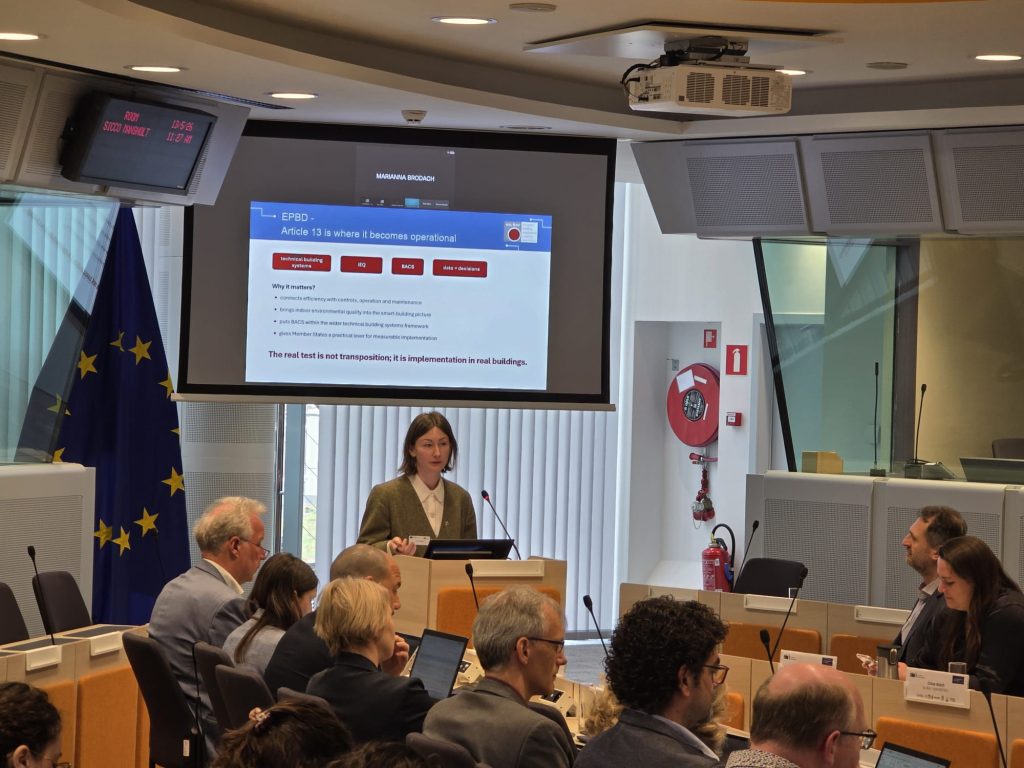
On 13 May 2026, the European Commission hosted the event “Supporting EPBD implementation – Practical solutions developed by EU-funded initiatives”, bringing together EU-funded projects, national experts and practitioners to explore how the revised Energy Performance of Buildings Directive (EPBD) can be effectively implemented in practice. eu.bac joined this event to bring in the perspective of the Building Automation and Control Systems (BACS) industry, as well as insights from the OpenBEP4EU project.
The event focused on bridging the gap between legislative requirements and real-world application, at a key moment just ahead of the EPBD transposition deadline of 29 May 2026. As highlighted throughout the discussions, implementation is not only a policy challenge but also a technical and operational one: it requires robust methodologies, interoperable data, and practical tools that can be used by Member States and market actors.
BACS and Article 13: enabling effective EPBD implementation
During the event’s first session, Chloe Walsh, eu.bac’s Project Manager, contributed to the discussion with a focus on the role of BACS in supporting EPBD implementation, particularly in relation to Article 13.
Her intervention highlighted how BACS can act as a key enabler for delivering the EPBD’s objectives in practice. By supporting monitoring, control and optimisation of building energy performance, BACS contribute to more accurate assessments and improved operational performance of buildings. This is particularly relevant in the context of the EPBD’s increased focus on performance in use and the integration of different assessment frameworks.
Chloe also underscored the importance of aligning BACS deployment with broader implementation tools and methodologies. As discussed during the session, effective EPBD implementation depends on the ability to connect different elements – such as Energy Performance Certificates (EPCs), Smart Readiness Indicator (SRI), and renovation pathways – into a coherent and interoperable system.
In this context, BACS play a crucial role in generating reliable operational data and enabling smarter, more responsive buildings, thereby supporting the transition towards more digitalised and performance-based building management approaches.

OpenBEP4EU: building a common technical foundation for EPC implementation
The third and last session of the event also featured contributions from the OpenBEP4EU project, which focuses on developing an open-source calculation engine for EPCs.
The initiative responds directly to current challenges in EPBD implementation, notably the diversity of EPC calculation methodologies and tools across Member States. By providing a common, standards-based calculation framework, OpenBEP4EU contributes to greater comparability of EPCs and helps reduce fragmentation.
More broadly, as highlighted during the session, projects such as openBEP4EU play an important role in translating EPBD requirements into practical implementation tools. Together with other EU-funded initiatives, they contribute to building a shared technical foundation and supporting Member States in moving from legislation to delivery.


eu.bac remains committed to supporting Member States in translating EPBD legislation to usable implementation, both through useful tools and checklists on smart building provisions , and through our work within OpenBEP4EU.