Petit Val school cuts energy use by 19% in six months with BACS
- Project: Groupe scolaire Petit Val
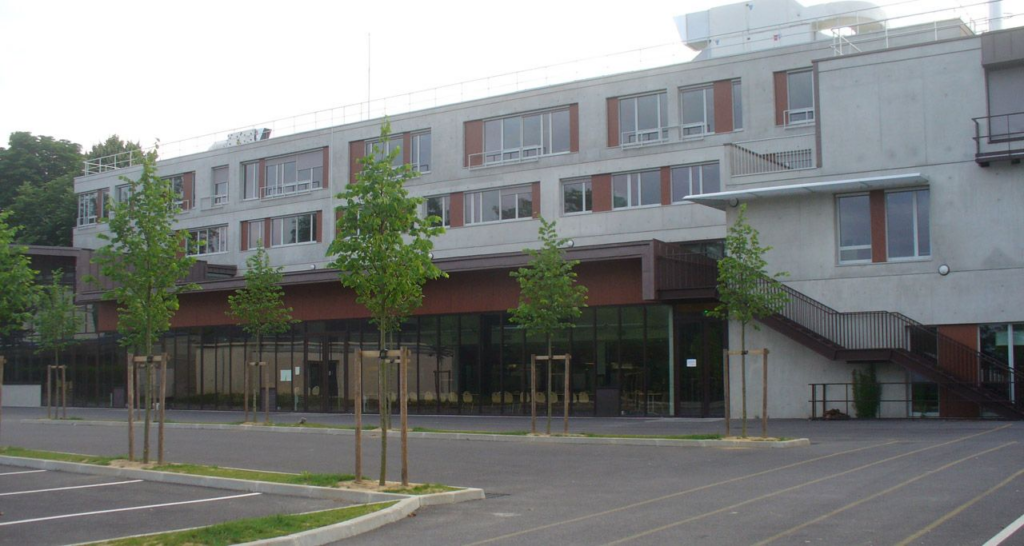
- Building: School complex, >10,000 m², 1,500 students across 3 units
- Country: France
- Technology: Integrated Building Automation and Control System (BACS), central energy-management platform, remote energy metering, room-level controls, IEQ sensors.
- Results: 19% energy savings and a 35% reduction in reported operational carbon footprint over the first six months
How an occupied, mixed-age school campus in France used building automation, non-intrusive metering and room-level control to reduce energy use while maintaining classroom comfort.
The challenge: bring efficiency and regulatory compliance to a complex building in use
Triggered by the French BACS Decree and Tertiary Decree, the Petit Val school began its retrofit process in 2024. The Tertiary Decree sets progressive energy-reduction targets for eligible tertiary buildings of 40% by 2030, 50% by 2040 and 60% by 2050, while the BACS Decree requires building automation for eligible buildings based primarily on the rated capacity of their heating or cooling systems. The project also aimed to achieve at least Class C automation according to ISO 52120-1.
With 1,500 students across three units (kindergarten and primary school, middle school, and high school), it was necessary to ensure that construction would not disrupt classes. BACS made this possible by enabling a largely non-intrusive retrofit, allowing the work to be completed without closing the campus or creating disruptive noise.
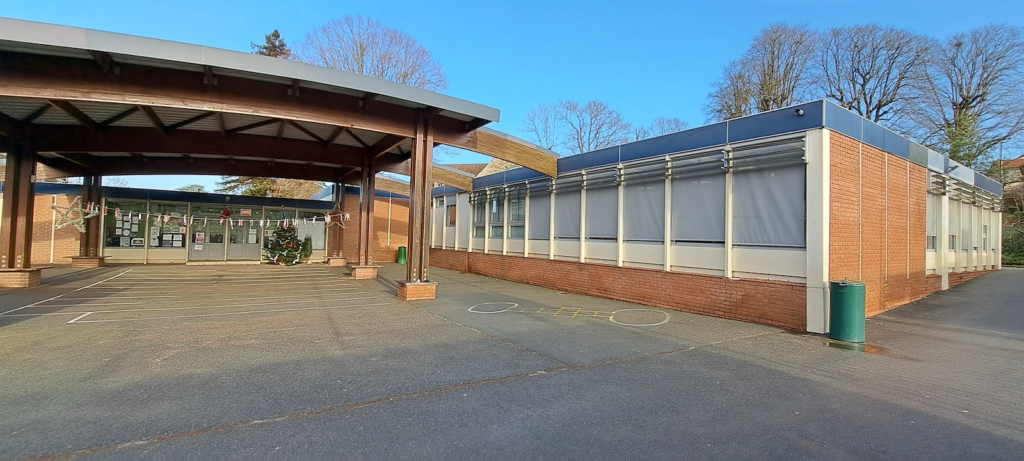
The solution: A BACS tailored to a mixed-age campus
Petit Val led the project, Enezen acted as the BACS integrator, Smart Impulse supplied the non-intrusive energy metering, and Siemens provided the building automation and energy-management technology.
With this, a comprehensive Building Automation and Control System (BACS) was implemented, tailored to the site’s diverse buildings and technical maturity levels.
The project began with a technical and energy audit that identified existing equipment — boilers, air handling units, and both communicating and non-communicating devices — to determine what could be retained, controlled, or optimised. Non-intrusive energy metering provided granular consumption data by zone and usage, enabling targeted actions rather than broad assumptions. This revealed ventilation as a major inefficiency, leading to a 37.5% reduction in energy use for ventilation and auxiliary systems.
The system also integrated room-level regulation for heating and cooling, indoor environmental quality (IEQ) sensors for CO₂ concentration, temperature and relative humidity on each floor, and centralised monitoring with alerts and performance tracking. All data fed into a central energy-management platform, allowing operators to follow consumption, visualise deviations, and adjust settings throughout the school year. This enabled occupancy-based optimisation – particularly critical during holidays, where automated shutdowns delivered a 67% reduction in energy consumption during the analysed summer period.
Why this matters for EPBD
The Petit Val project demonstrates several core BACS functions aligned with the Energy Performance of Buildings Directive:
- Continuous monitoring and analysis of energy use by zone and usage, enabling targeted interventions rather than broad assumptions
- Interoperability across a heterogeneous building stock with varied technical standards and equipment
- Benchmarking and detection of inefficient system operation, identifying ventilation as a major inefficiency
- Monitoring indoor environmental quality, including CO₂ concentration, temperature and relative humidity.
The Petit Val case shows that simple, non-intrusive BACS projects can rapidly advance energy efficiency. With minimal metering and targeted controls, the school reduced its energy use by 19% over the first six months, with an estimated payback period of under three years, and complied with legislation — proving modest BACS investments deliver immediate savings while future-proofing buildings.
Reported impact
- 19% energy savings over the first six months;
- a 67% reduction in energy consumption during the analysed summer period;
- 35% reduction in the reported operational carbon footprint over the first six months;
- Estimated payback period of under three years (€100,000 investment);
- Energy budget reduced from 11% to 7% of an annual budget of just under €6 million;
- Improved comfort and better learning conditions for students.
Find out more
Read the KNX France project profile.
Read the Smart Impulse project report.