
Decarbonising an Industrial Campus: The GW St. Pölten Case Study
- Project: GW St. Pölten
- Building: 4 industrial buildings (17,500 m²) – supported employment facility
- Country: Austria
- Technology: Energy flow diagnostics, monitoring and hydronic balancing with pressure-independent control valves.
- Results: 1,088 tCO₂e saved (distribution/hydronics); heat pump downsized from 1 MW to 500 kW saving ~EUR 200,000 in investment costs
Getting the heating system right before investing in new generation equipment is a central but often overlooked challenge in building decarbonisation. This case study looks at the GW St. Pölten project in Austria — an industrial campus operated by a supported employment company — where energy flow diagnostics and hydronic balancing, implemented by the Belimo Climate Foundation in partnership with energy consultants Das Leitwerk, proved to be the decisive enabler for a larger decarbonisation programme.
Rather than starting with a like-for-like replacement of the existing gas boiler capacity, the project first used monitoring and energy flow diagnostics to understand real heating demand. Hydronic balancing then stabilised the distribution system, allowing the future heat pump capacity to be reduced from 1 MW to 500 kW.
The challenge: an unmonitored heating system and an oversized gas plant
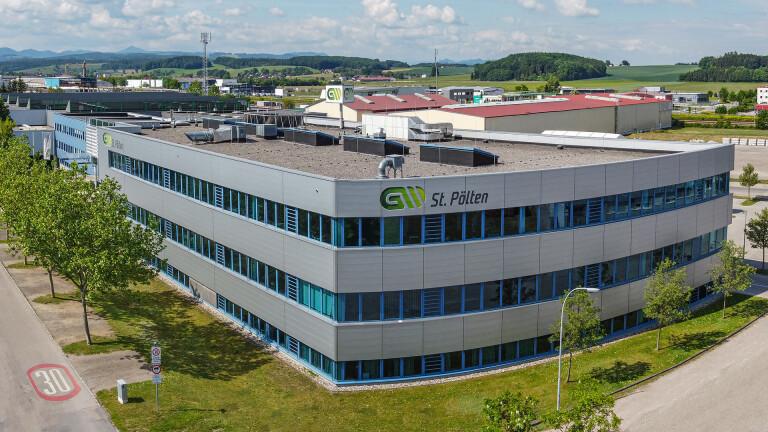
GW St. Pölten Integrative Betriebe GmbH is a leading Austrian company specializing in supported employment, with approximately 560 employees, 70% of whom have disabilities. Its campus in St. Pölten comprises four industrial buildings covering 17,500 m², used for metal, electrical, textile, advertising technology and service operations.
At the start of the project, the site was heated by four gas boilers with a combined output of 1 MW. No systematic monitoring of energy flows was in place, and the heating distribution system had never been hydraulically balanced. Annual thermal energy consumption stood at 653 MWh. The building owner, together with the Belimo Climate Foundation, set a clear project goal: decarbonise the campus through owner-implementable measures, focusing on reducing energy use, carbon emissions and operating costs, without major structural interventions.
The response: diagnostics and hydronic control as the starting point
Das Leitwerk conducted a detailed site analysis before any investment decisions were made. Central to this was the early installation of measurement points for energy flow diagnostics. Rather than relying on theoretical parameters or nameplate data, the team collected real operational data from the existing heating installation, mapping actual heat flows, identifying inefficiencies, and establishing an evidence base for system redesign.
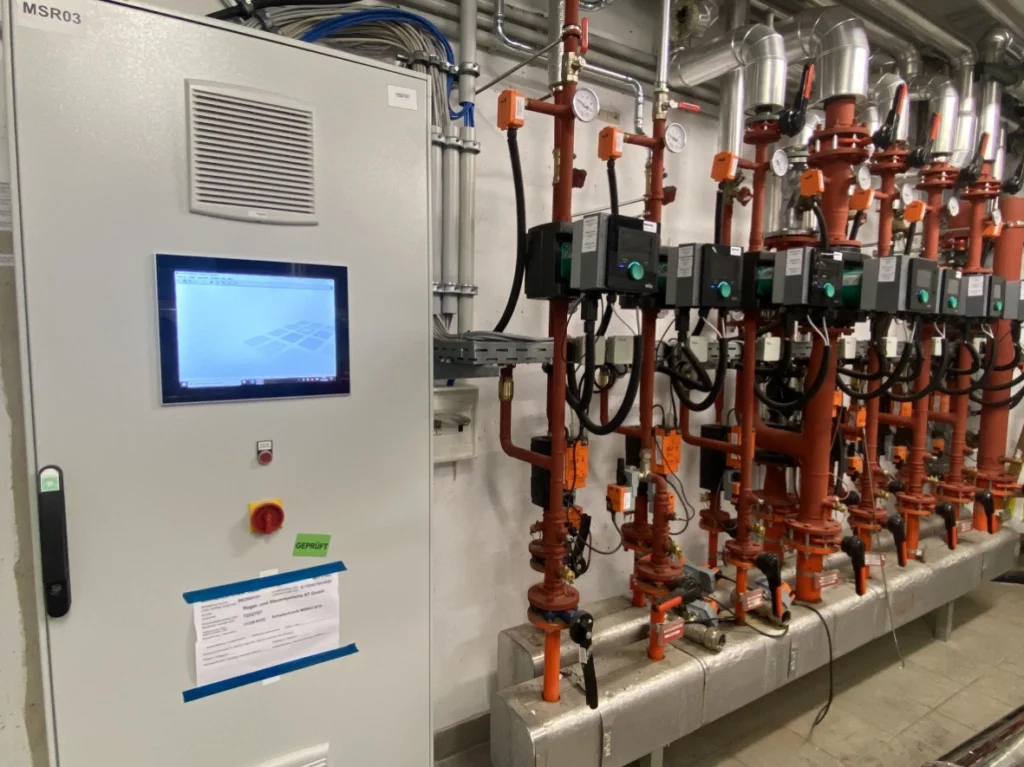
What the monitoring revealed was striking: the existing hydronic system showed strong cycling behavior, with excessively high and unstable supply and return temperatures. Based on this diagnostic data, the team implemented hydronic balancing using pressure-independent control valves. This stabilized system behavior, improved heat distribution across the campus, and allowed the piping and valve network to be re-dimensioned to smaller nominal diameters. The re-sizing alone saved approximately 15% in investment costs for the distribution system.
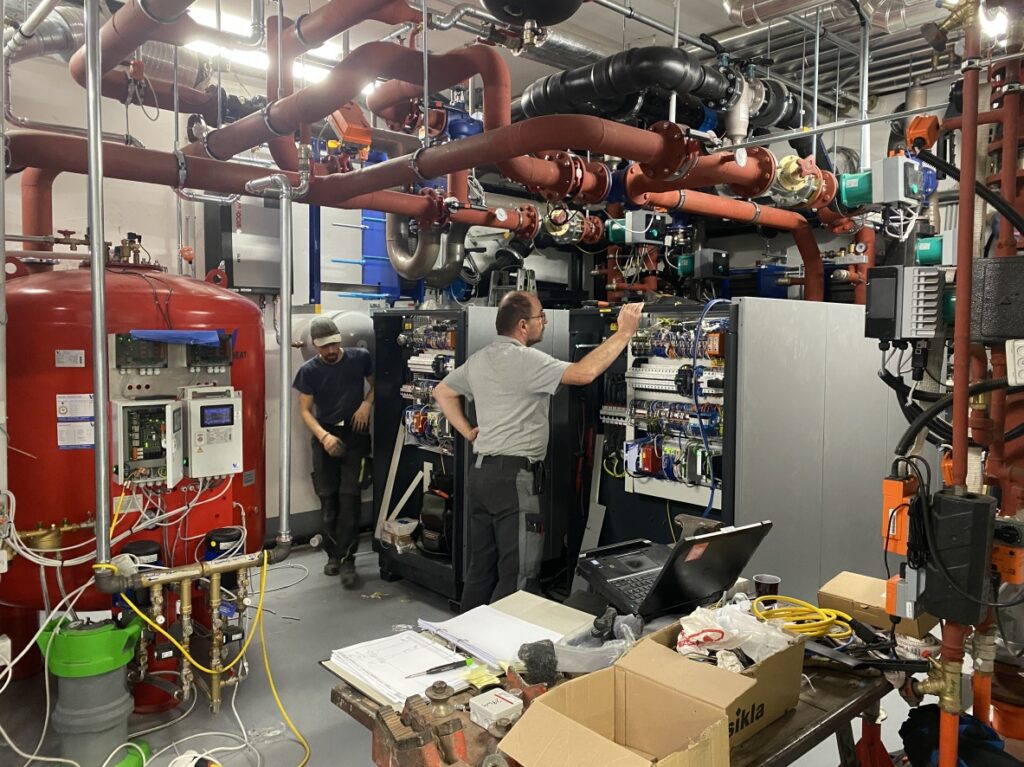
Because the monitoring data provided an accurate picture of real heating demand — and because the balanced distribution system now operated at lower, more stable temperatures — the planned heat pump replacement system could be downsized from 1 MW to 500 kW. This right-sizing, made possible by the BACS-enabled diagnostics, translated into an estimated investment saving of approximately EUR 200,000 on the heat generation equipment alone.
Why this matters for the EPBD
The GW St. Pölten project illustrates several BACS functions that are directly relevant to the requirements of the recast Energy Performance of Buildings Directive for non-residential buildings, including Article 13 Paragraphs 3 and 10:
- hydronic balancing of the heat distribution system, implemented here through pressure-independent control valves, delivering system stability, lower operating temperatures and reduced energy waste;
- continuous monitoring and analysis of energy use and heat distribution across the building’s technical systems;
- detection of inefficient system operation — in this case, cycling behavior and thermal imbalance that had persisted undetected without metering.
This project shows how BACS functions can be the prerequisite for successful, cost-effective decarbonisation — enabling better investment decisions, reducing over-specification risk, and improving the long-term performance of new heating systems.
For EPBD implementation, the lesson is clear: monitoring and hydronic balancing should come before major heating system replacement decisions. This helps reduce energy waste, avoid oversizing, and lower the cost of switching to renewable heat.
Reported impact
The hydronic optimization and monitoring measures delivered the following results:
- 1,088 tCO₂e in direct carbon savings attributed to distribution and hydronics improvements over the project lifetime;
- CHF 158,000 in energy cost savings from improved heat distribution (~ € 128,000,– per year);
- approximately EUR 200,000 saved in heat pump investment costs, as a direct result of right-sizing enabled by early diagnostics;
- heat pump capacity reduced from 1 MW to 500 kW — a 50% reduction in generation capacity — without compromising heating performance.
Find out more
Watch eu.bac’s webinar recording for a complete overview of this project.
Reach out to Reto Wälchli (Managing Director of Belimo Climate Foundation) for more information.
Read more about the project here.